
My most recent publication in this field is Art Auctions: Spectacle and Value in the 21st Century (Lund Humphries, 2024).
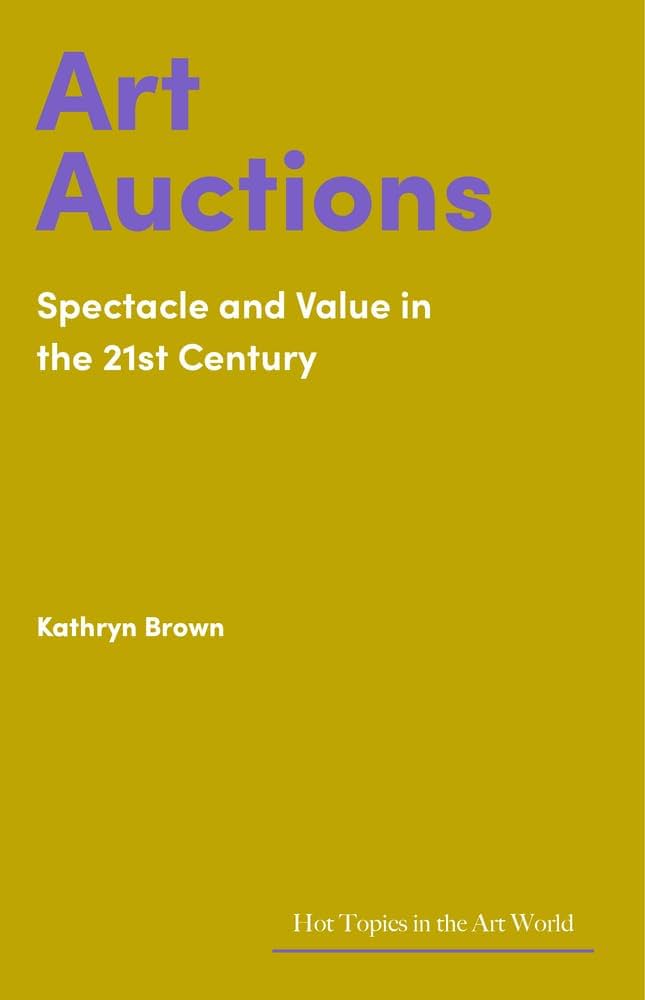
This book explores the changing ambitions and activities of auction houses, shedding new light on the power structures of global art commerce. It offers a fresh view of art auctions, exploring their multifaceted role in today’s international art market and their transformation into spectacular theatres of the contemporary art world. From glittering black-tie events to the anonymity of the digital realm, auctions stage the creation of value and can make or break artists’ careers. They are a strange phenomenon: relics from the 18th century which remain at the heart of the art market.
Yet art auctions have undergone huge change in the past decades, adapting to online formats, encroaching on territory which was once the preserve of galleries, and expanding ruthlessly into new regions and categories. Kathryn Brown’s incisive new survey assesses the ongoing relevance of auctions to contemporary art markets and discusses the opportunities, controversies and conflicts of value to which they give rise
‘Academic and erudite, Kathryn Brown’s detailed assessment of the auction landscape insightfully analyses key issues facing the sector today.’ – Philip Hoffman, CEO and Founder, The Fine Art Group
Contextualizing Art Markets: Bloomsbury Academic

I am the series editor of Contextualizing Art Markets for Bloomsbury Academic. This series presents new, original research that reconceives the scope and function of art markets throughout history by examining them in the context of broader institutional practices, knowledge networks, social structures, collecting activities, and creative strategies. In many cases, art market activities have been studied in isolation from broader themes within art history, a trend that has tended to stifle exchange across disciplinary boundaries. Contextualizing Art Markets seeks to foster increased dialogue between art historians, artists, curators, economists, gallerists, and other market professionals by contextualizing art markets around the world within wider art historical discourses and institutional practices.
Discover recent publications in the series on Bloomsbury’s webpage.
Editorial Board:
Véronique Chagnon-Burke, The International Art Market Studies Association (Co-Chair), USA
Christel H. Force, Independent researcher, USA
Charlotte Galloway, Australian National University, Australia
Mel Jordan, Coventry University, UK
Alain Quemin, Université Paris-8, France
Mark Westgarth, University of Leeds, UK
Please contact me at k.j.brown[@]lboro.ac.uk if you are interested in submitting a book proposal for the series.
Speaking at the launch of Bloomsbury Art Markets, Sotheby’s Institute of Art (London) in 2023.
My recent publications and presentations on art market themes include:
‘Art Markets, Epistemic Authority, and the Institutional Curation of Knowledge’ in Cultural Studies, Vol. 37, Issue 4, 2023. https://doi.org/10.1080/09502386.2022.2030777
The recent proliferation of data about art prices has been interpreted as the democratization of a formerly secretive economic sphere. Contesting this idea, I argue that such data is collected, controlled, and disseminated by international art dealers and auction houses for the purpose of reinforcing the myth of a single, integrated market for art. Through the analysis of presentation strategies in Gagosian Gallery’s online viewing rooms and Sotheby’s Mei Moses Index, I argue that dominant art world institutions use art history and price data to support the speculative value of artworks and to perpetuate knowledge asymmetries that reinforce their own epistemic authority. I debate whether Friedrich Hayek’s conception of price as an unbiased aggregator of dispersed information is a useful way of conceptualizing speculative value in the art world. I conclude that, in contrast to Hayek’s ideas, contemporary art market data is given the illusion of democratic dispersal while remaining within the purview of dominant institutions. The curation of knowledge involved in this process exacerbates art world inequality and risks sidelining the heterogeneous creative practices that populate a broad range of creative spheres.
‘Screen Culture, Online Auctions and Art Market Spectacle’ in Visual Studies, May 2021. https://doi.org/10.1080/1472586X.2021.1915176.
This article examines the symbolic, financial, and visual qualities of spectacular, multi-site, online art auctions staged by Sotheby’s and Christie’s during the COVID-19 pandemic. It is argued that these events adopted visual techniques drawn from television gameshows and popular cinema culture to create a distinctive screen-based reality for the transaction of art assets. Much of the rhetoric employed by the auction houses to publicize online auctions suggested a utopian conception of technology capable of encouraging artistic innovation and broadening access to art markets. In contrast to the idea that these online formats constitute democratic change in the artworld, this article argues that the control of new technological infrastructures represents an extension of institutional power and maintains the socio-cultural elitism of urban centres in which physical art auctions at the top end of the market have traditionally been conducted.
Museums and Art Markets
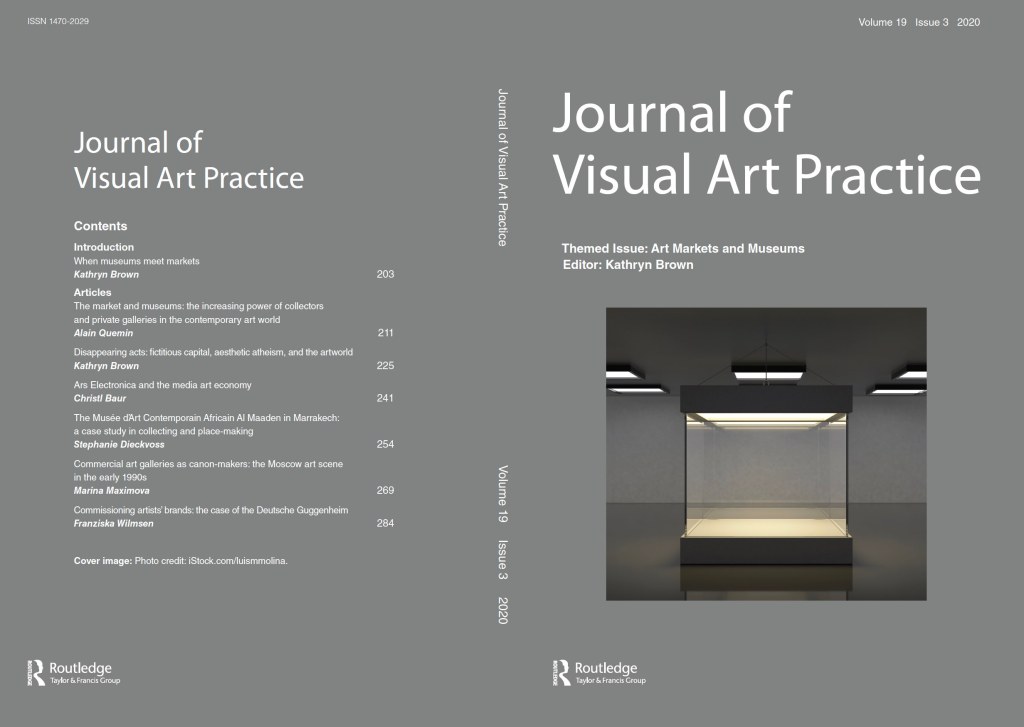
The special issue that I edited for the Journal of Visual Art Practice (Vol. 19, Issue 3, October 2020) contains my Introduction (‘When Museums Meet Markets‘) and my article: ‘Disappearing Acts: Fictitious Capital, Aesthetic Atheism, and the Artworld).
Podcast: ‘Fictitious Capital and the Artworld’ for The Cultural Life of Money and Finance (2021).
Podcast: ‘Art, Money, and Aesthetic Atheism’ for Ipse Dixit (2020)
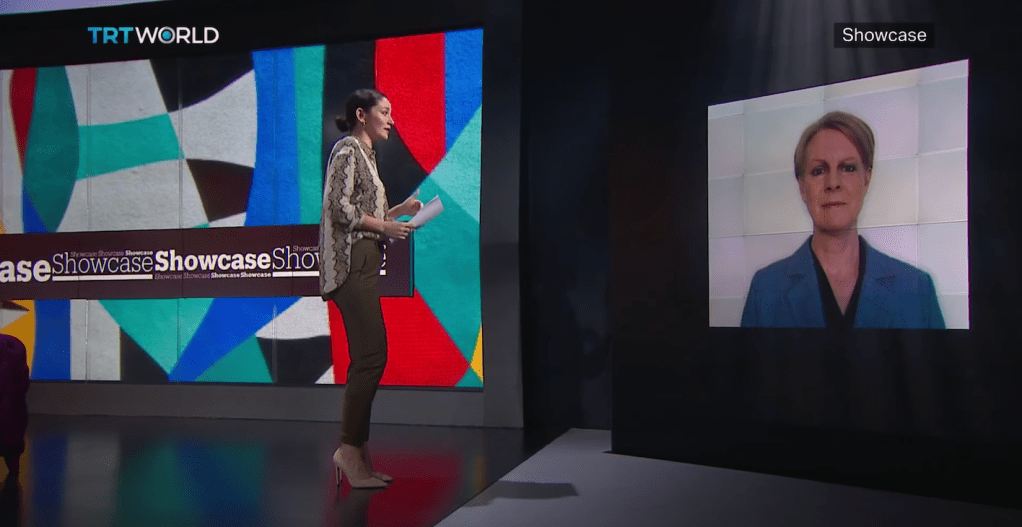
Interview with Elif Bereketli for Showcase (TRT World) about artists’ online sales strategies and the possible changes these imply for the art market (October 2020).
‘Art Auction Spectacle in the 21st Century’, University of Melbourne, Australia (2023)
‘Economics or Aesthetics? The Structural Transformation of the 21st-century Artworld’, Executive Masters Programme, Royal Academy of Arts, London (2023)
‘Trophy Hunters or Tastemakers? The Robber Barons and Artworld Spectacle in the Gilded Age’, The Al Thani Collection, Hôtel de la Marine, Paris (2022)
‘Private Museums and Public Goods’, Royal Academy of Arts, London (2021)
Invited Respondent: Book Workshop, Georgina Walker, The Private Collector’s Museum, The International Association for Art Market Studies (2021)
‘Patrimony, Patronage and Power: Contemporary Challenges in Collection Management’, FCSH NOVA Lisbon (2021)
‘Modernist Market Making: The Case of Henri ‘Le Douanier’ Rousseau’, Association for Art History, Birmingham, UK, 2021.
Member of Scientific Committee: The Art Market and the Museum, The International Art Market Studies Association, Edinburgh 2021.
Special Issue: Journal for Art Market Studies: Politics. Vol 3, no. 1, 2019.
“Private Influence, Public Goods and the Future of Art History”, Journal for Art Market Studies. Vol. 3, no. 1, 2019.

‘Making History: Museums and Markets in a Globalized Art World’, Art Talks, Abu Dhabi Art Fair, 2018.
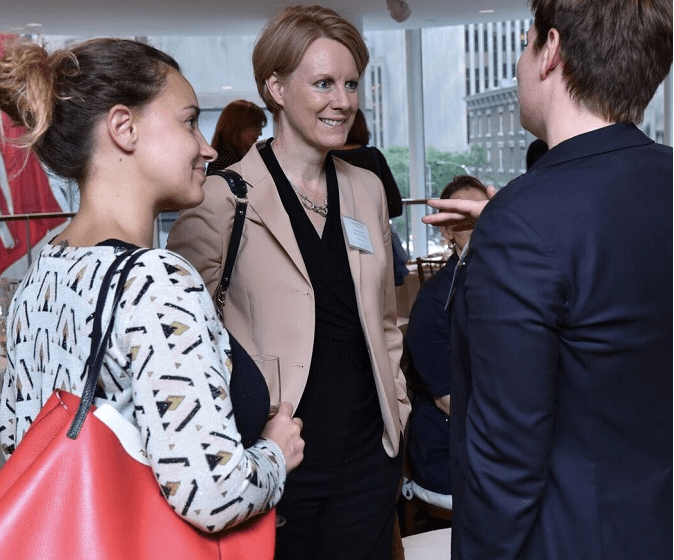
Session Convenor: “Mapping Female Associational Life in the Visual Arts”, Christie’s, New York, “Celebrating Female Agency in the Arts“, June, 2018.
Public v Private Art Collections: Who Owns our Cultural Heritage, The Conversation, August 11 2017
‘The Privatization of Public Museum Culture and the Future of Art History’, presentation at The Global Power of Private Museums: Arts and Publics – States and Markets, Berlin, November 16–18, 2017.
‘Patrimony and Patronage: Collecting and Exhibiting Contemporary Art in France’, presentation at Collecting and Public Display: Art Markets and Museums, University of Leeds, 30–31 March, 2017.
‘Collecting, Consuming, and Creating: Debunking Myths of Taste Making in the Contemporary Artworld’, Christie’s, London, July, 2016.
‘The Art Market as a Knowledge Economy’, Conference on ‘Art Market Studies: Art History’s Salvation or Doom’, Christie’s, New York, April, 2015.
 Kathryn Brown: Art History